- 10/08/2026
- Dr. Samrat Jankar
- 0 Comments
- Blog
Functional Constipation vs IBS-C: Different Treatments Explained
Many people in India suffer from constipation. Some have simple constipation. Others have a condition called IBS-C. These two are not the same. But people often confuse them, and this confusion leads to wrong treatment.
Both conditions cause hard stools and difficulty passing stool. But the root cause, the pain pattern, and the treatment are different. If you treat IBS-C like simple constipation, you may not get relief. If you treat Functional Constipation like IBS-C, you may take unnecessary medicines. That is why correct diagnosis matters.
Dr. Samrat Jankar, a leading Laparoscopic and Colorectal Surgeon at Kaizen Gastro Care, Pune, explains the difference in simple words. With 17+ years of experience, 3000+ laparoscopic surgeries, and 20000+ happy patients, Dr. Samrat Jankar is known as one of the Best GI Surgeons in Pune. He is also the Director and Head of GI Surgery at Kaizen Gastro Care, and the developer of the PILTEC technique for complex fistula treatment. His experience in gut and colon health helps patients get the correct diagnosis, right from the first visit.
This blog will help you understand Functional Constipation and IBS-C in detail. You will learn their causes, symptoms, diagnosis, and the right treatment for each.
What is Functional Constipation?
Functional Constipation is a common digestive disorder. It means your bowel movements are slow. There is no structural disease, tumour, or blockage causing it. The colon simply moves stool slowly, or the muscles do not coordinate properly during passing stool.
Doctors call it “functional” because the bowel looks normal on tests. But it does not function at the right speed.
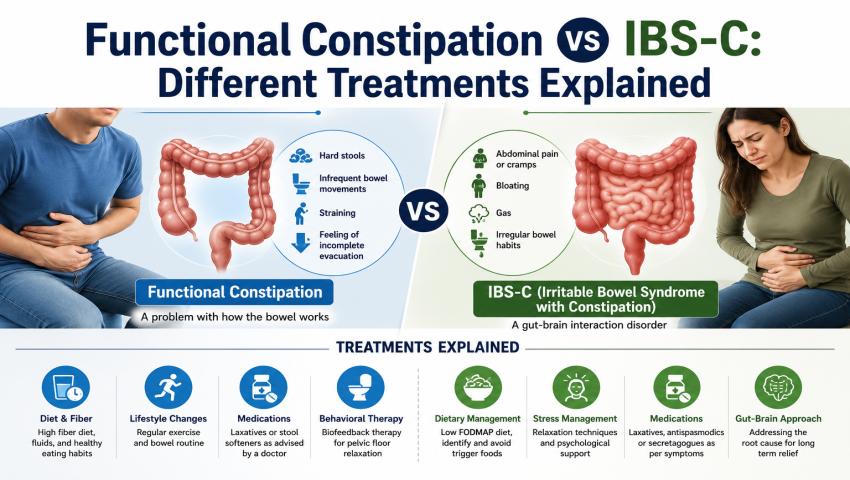
Common signs include:
- Infrequent bowel movements (less than 3 times a week)
- Hard stools
- Difficulty passing stool
- Incomplete bowel emptying
- Straining during motion
- Feeling of blockage in the rectum
This condition affects gut health but does not always cause much abdominal pain. Many patients live with it for years without knowing the exact cause. It is more common in people who eat low-fibre food, drink less water, or sit for long hours at work.
What is IBS-C (Irritable Bowel Syndrome with Constipation)?
IBS-C stands for Irritable Bowel Syndrome with Constipation. It is a type of Irritable Bowel Syndrome where constipation comes along with pain. Unlike Functional Constipation, IBS-C is directly linked to how the gut and brain communicate with each other.
In IBS-C, the nerves of the intestine become extra sensitive. Even normal gas or stool movement feels painful. This is called visceral hypersensitivity, and it is the main reason IBS-C patients feel more discomfort than others.
People with IBS with Constipation often feel:
- Abdominal pain or belly pain, especially before passing stool
- Bloating that gets worse during the day
- Gas and constipation together
- Rectal discomfort
- Changes in stool consistency (from hard to lumpy)
- Pain that reduces after passing stool
IBS-C is linked to the gut-brain connection. Stress, anxiety, and irregular eating can trigger flare-ups. Many patients notice their symptoms increase during exams, work pressure, or emotional stress. This is why IBS-C is treated differently from plain constipation.
Functional Constipation vs IBS-C: Key Differences
The Difference Between Functional Constipation and IBS-C is mainly about pain.
Both fall under chronic constipation and digestive disorders. But their treatment differs, because their root cause is different. Functional Constipation is mainly a movement problem in the colon. IBS-C is mainly a sensitivity problem linked to the gut-brain connection. Understanding this difference helps Dr. Samrat Jankar plan the correct treatment for each patient.
Common Symptoms of Functional Constipation and IBS-C:
Functional Constipation and IBS-C have some different symptoms. Knowing them separately helps you understand your own condition better.
Symptoms of Functional Constipation:
- Hard stools
- Straining while passing stool
- Infrequent bowel movements
- Feeling of incomplete bowel emptying
- Mild bloating, but not much pain
- Need to use fingers or pressure to pass stool, in some cases
Symptoms of IBS-C:
- Abdominal pain or belly pain, especially before passing stool
- Pain that reduces after passing stool
- Heavy bloating and gas
- Alternating hard and lumpy stools
- Feeling of urgency, along with constipation
- Symptoms that increase during stress
The main difference is abdominal pain. IBS-C patients feel pain that improves after passing stool. Functional Constipation patients usually do not have much pain.
What Causes Functional Constipation and IBS-C?
The causes of both conditions are also different. Understanding your trigger helps in choosing the right treatment.
Causes of Functional Constipation:
- Low fiber intake in daily diet
- Less water intake
- Sedentary lifestyle and lack of exercise
- Ignoring the urge to pass stool
- Certain medicines, like painkillers or iron tablets
- Irregular meal timings
- Overuse of laxatives, which weakens natural bowel movement
- Old age or weak pelvic muscles
Causes of IBS-C:
- Gut-brain connection imbalance
- Stress and anxiety
- Food sensitivity, like to dairy or spicy food
- Hormonal changes, more common in women
- Past gut infection
- Family history of IBS
- Sensitive intestinal nerves
Poor lifestyle habits are a common cause of Functional Constipation. But in IBS-C, food sensitivity and stress play a bigger role. Identifying the exact trigger is an important part of treatment at Kaizen Gastro Care.
How Doctors Diagnose Functional Constipation and IBS-C?
Diagnosis needs a proper check-up. Self-diagnosis often leads to wrong treatment. Dr. Samrat Jankar follows a detailed process at Kaizen Gastro Care:
- Detailed history of bowel habits, diet, and lifestyle
- Physical examination, including a per-rectal check
- Blood tests, to rule out thyroid or other causes
- Colonoscopy, if needed, to check colon health and rule out serious disease
- Rome IV criteria, a standard international guideline used for IBS-C diagnosis
- Stool tests, if infection is suspected
This helps to rule out other colon health issues, such as colon polyps or inflammatory bowel disease, and confirm the exact condition. Only after a proper diagnosis, the right Constipation Treatment plan is made.
Treatment for Functional Constipation and IBS-C:
Functional Constipation Treatment mainly focuses on lifestyle changes and improving bowel movement naturally:
- High-fiber foods, added slowly to avoid gas
- More water intake, at least 2 to 3 litres a day
- Regular exercise, like walking for 30 minutes
- Healthy bowel habits, such as a fixed toilet time daily
- Osmotic laxatives, if needed, under medical guidance
- Stool softeners for hard stools
- Biofeedback therapy, in cases of muscle coordination problems
IBS-C Treatment is more detailed, as it also targets the gut-brain connection:
- Diet changes, including a low-FODMAP diet in some cases
- Probiotics for gut health and better digestion
- Stress management, through counselling or relaxation techniques
- Medicines for gut-brain connection, such as gut-specific antispasmodics
- Laxatives under doctor’s guidance, used carefully to avoid dependency
- Regular follow-up to adjust treatment as symptoms change
Constipation Treatment in Pune at Kaizen Gastro Care is planned as per each patient’s need. Dr. Samrat Jankar does not believe in a one-size-fits-all approach. Every patient gets a treatment plan based on their symptoms, lifestyle, and test reports.
Can Functional Constipation Turn Into IBS-C?
Yes, this can happen. Long-term Functional Constipation can affect the gut-brain connection. When constipation continues for months without treatment, the intestine’s nerves can become more sensitive. Over time, some patients develop pain and bloating along with their constipation. This shifts the diagnosis to IBS-C.
Untreated chronic constipation can also lead to other problems, like piles, anal fissure, or rectal prolapse. That is why early Constipation Treatment is important. Do not ignore chronic constipation, even if it feels minor in the beginning.
Foods to Eat and Foods to Avoid:
Foods to Eat:
- Fruits like papaya, guava, and pears
- Vegetables and leafy greens
- Whole grains
- High-fiber foods like oats
- Probiotics like curd and yogurt
- Plenty of water
Foods to Avoid:
- Fried and oily food
- Processed food
- Excess dairy
- Caffeine and alcohol
- Refined flour products
Simple food changes support healthy digestion and colon health.
When Should You See a Doctor?
Visit a gastroenterologist if you notice:
- Constipation lasting more than 3 weeks
- Blood in stool
- Unexplained weight loss
- Severe abdominal pain
- No relief with home remedies
Dr. Samrat Jankar advises early consultation. Delay can worsen digestive disorders.
Tips to Keep Your Digestive System Healthy:
- Drink enough water daily
- Eat fiber-rich food
- Exercise regularly
- Do not skip meals
- Manage stress
- Follow a fixed bowel routine
- Avoid overuse of laxatives
Small daily habits make a big difference to gut health.
Frequently Asked Questions (FAQs):
Functional Constipation has little pain. IBS-C comes with abdominal pain and bloating.
IBS-C is a functional gut disorder. It is manageable with the right treatment.
Mild cases improve with diet. Severe cases need medical treatment.
Dr. Samrat Jankar at Kaizen Gastro Care is a trusted name for constipation and IBS-C treatment in Pune.
Long-term use should be under a doctor’s supervision only.
Conclusion:
Functional Constipation and IBS-C may look similar. But their causes and treatments are different. Correct diagnosis is the first step to relief.
If you are facing chronic constipation, bloating, or bowel movement problems, do not ignore it. Book a consultation with Dr. Samrat Jankar, one of the Best GI Surgeons in Pune, at Kaizen Gastro Care, Wakad, Pune.