
- 16/05/2026
- Dr. Samrat Jankar
- 0 Comments
- Hernia
Epigastric Hernia: Early Causes, Symptoms & Best Treatment Options
Do you feel a small lump just above your belly button? Does it hurt when you cough, sneeze, or lift something heavy? Many people in India think it is just gas or acidity and ignore it. But this could be a sign of an epigastric hernia — a real medical condition that needs proper attention.
The good news? It is very treatable. And the earlier you catch it, the easier the treatment. In this blog, we explain everything in simple language — what epigastric hernia is, why it happens, what signs to look for, and how to get the best hernia treatment in Pune.
What Is Epigastric Hernia?
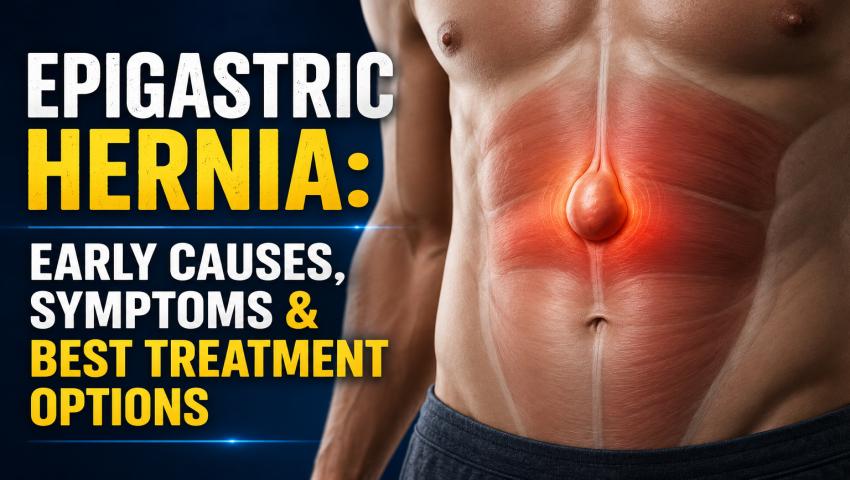
An epigastric hernia is a type of hernia that forms in the upper part of your abdomen — between your chest bone (sternum) and your belly button (navel). This area is medically called the epigastric region.
In simple words: the muscles in your belly wall become weak at one spot. Because of this weakness, fat tissue — and sometimes a small part of the intestine — pushes outward and creates a lump under the skin.
The lump can be small or large. Some people feel no pain at first. But over time, if left untreated, it can grow and cause serious complications.
Quick Fact: Epigastric hernias are more common in men than women. They can develop at any age — including in young children and newborns.
What Causes an Epigastric Hernia?
There is usually no single cause. It is mostly a combination of weak abdominal muscles and increased pressure inside the belly. Common causes include:
- Born With It (Congenital Weakness): Some people are born with a naturally weak spot in the abdominal wall. This makes them more prone to developing a hernia later in life.
- Heavy Lifting: Lifting heavy objects repeatedly — at work or in the gym — puts too much pressure on your belly muscles and can cause them to tear or weaken over time.
- Obesity: Extra body weight increases constant pressure on your abdominal wall, making it more likely to develop a hernia.
- Pregnancy: During pregnancy, the growing baby puts significant pressure on the mother’s belly wall. This can cause a weak spot to open up.
- Chronic Cough or Sneezing: Long-term coughing — due to asthma, smoking, or infections — strains the belly muscles repeatedly and weakens them gradually.
- Smoking: Smoking damages connective tissue in the body, making the abdominal wall weaker and more vulnerable to hernias.
- Previous Surgery or Injury: A scar or injury in the belly area can leave a weak spot that develops into a hernia over time.
Epigastric Hernia Symptoms — What to Look For?
The early signs of an epigastric hernia can be easy to miss or confuse with other problems, like acidity. Here are the most common epigastric hernia symptoms to watch out for:
- Visible Lump or Bulge: This is the most common sign. You will notice a soft swelling or lump in the upper abdomen — usually more visible when you stand up, cough, or strain during a bowel movement.
- Pain or Discomfort: Mild to sharp pain near the lump, especially after eating a heavy meal or doing physical activity. The pain may come and go.
- Burning or Pulling Sensation: A burning or pulling feeling near the hernia area — often confused with acidity or gastric problems.
- Tenderness to Touch: The area around the lump may feel tender or sore when you press on it gently.
- Nausea or Vomiting: In some cases — especially if the hernia becomes trapped — you may feel nauseous or vomit. This is a sign of a more serious complication.
Emergency Warning: If the lump becomes hard, cannot be pushed back in, and you have severe pain, vomiting, or fever, go to the hospital immediately. This may be a strangulated hernia, which cuts off the blood supply to the tissue. It is a medical emergency.
How is an epigastric hernia diagnosed?
Diagnosis is usually quick and straightforward. Your doctor will:
- Physical Examination: The doctor gently feels your upper belly for a lump or bulge. They may ask you to cough or stand up, as this can make the hernia more visible.
- Ultrasound or CT Scan: Imaging tests confirm the exact size and position of the hernia, especially when the lump is small or not clearly visible from outside.
Early diagnosis always makes treatment simpler and faster. Do not delay your visit to the doctor.
Epigastric Hernia Treatment Options:
Not every hernia needs surgery right away. Treatment depends on the size of the hernia, your symptoms, and your overall health. Here are the main options:
- Watchful Waiting (For Small, Painless Hernias): If the hernia is very small and causes no pain, your doctor may suggest monitoring it closely with regular check-ups. Lifestyle changes like weight loss and avoiding heavy lifting are advised. This approach avoids surgery but requires careful tracking.
- Open Hernia Surgery: The surgeon makes one cut over the hernia, pushes the tissue back in, and stitches the weak muscle wall closed. It is a proven method, especially for larger hernias.
- Laparoscopic Surgery (Keyhole Surgery) — Most Preferred: This is the most modern and widely used method today. The surgeon makes 2 to 3 very small cuts instead of one large cut. A tiny camera guides the procedure. Benefits include: less pain after surgery, faster recovery (7 to 14 days), smaller scars, and lower risk of infection.
- Mesh Repair: In many cases, a surgical mesh (a small net-like material) is placed to strengthen the repaired belly wall. This significantly reduces the chance of the hernia coming back.
Important: A hernia will never heal on its own. Medicines, hernia belts, or home remedies can reduce discomfort temporarily — but only surgery permanently repairs it. Delaying treatment allows the hernia to grow larger and become more complicated.
Epigastric Hernia Treatment in Pune — Why Choose Dr. Samrat Jankar?
If you are looking for epigastric hernia treatment in Pune, Dr. Samrat Jankar is one of the most trusted names in the field.
Dr. Samrat Jankar is a Consultant Gastroenterologist and Interventional Endoscopist with over 17 years of experience in treating digestive and abdominal conditions. He specialises in hernia diagnosis and minimally invasive surgical treatment.
His clinic — Kaizen Gastro Care — is located at Wakad, Pune, and serves patients from across Pimpri-Chinchwad, Hinjewadi, Baner, and the wider PCMC region.
Conclusion:
Epigastric hernia is more common than most people think — and it is absolutely treatable. The key is to not ignore the signs. A small lump, mild pain, or burning sensation in the upper belly should not be dismissed as just acidity. The earlier you get it checked, the simpler the treatment. Laparoscopic surgery today is quick, safe, and allows you to recover fast and get back to normal life.
If you or anyone in your family has these symptoms, book a consultation with Dr. Samrat Jankar — an experienced hernia specialist in Pune — and get the right diagnosis and treatment.
Frequently Asked Questions (FAQ's):
No. The muscle gap does not close on its own. Small, painless hernias can be monitored for a while, but surgery is the only permanent fix. Waiting too long can make things worse.
Yes, it is a very common and safe procedure — especially laparoscopic surgery done by an experienced surgeon. Complications are rare when the surgery is planned early.
With laparoscopic surgery, most patients recover in 7 to 14 days. You can return to desk work within a week. Heavy lifting should be avoided for 4 to 6 weeks as advised by your surgeon.
Recurrence is uncommon, especially with mesh repair. Maintaining a healthy weight, quitting smoking, and following your doctor’s advice greatly reduces this risk.
You should consult a gastroenterologist or hernia specialist. In Pune, Dr. Samrat Jankar at Kaizen Gastro Care, Wakad, is a highly recommended choice.