
- 30/07/2026
- Dr. Samrat Jankar
- 0 Comments
- Blog
Which GI Conditions Can Be Treated with Robotic Surgery?
Robotic surgery is a new way to treat GI problems. It is safe. It is precise. It causes less pain to the body. Many patients are now choosing this over open surgery.
Dr. Samrat Jankar is a well-known Surgical Gastroenterologist in Pune. He has 17+ years of experience. He has done 5000+ surgeries. He has treated 20,000+ happy patients. As a trusted Robotic GI Surgeon, he helps patients heal faster with less pain.
In this blog, we will tell you which GI problems can be treated with robotic surgery. We will also tell you why this option may be good for you.
What Is Robotic GI Surgery?
Robotic GI surgery is a type of surgery done with small cuts. The doctor uses a robotic machine to do the surgery. But the robot does not work on its own. The surgeon controls it fully, all the time.
This method gives clear vision. It gives more control. It gives high accuracy. This is better than old-style open surgery.
How Does Robotic Surgery Work?
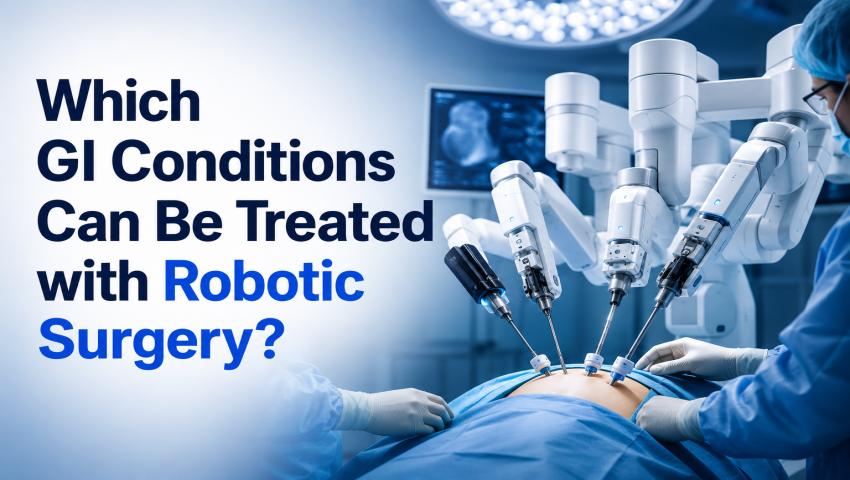
In robotic surgery, the doctor makes small cuts in the belly. Then thin tools and a small camera go inside through these cuts. The surgeon sits at a console nearby. He moves the robotic arms with his hands.
The camera shows a big, clear, 3D picture of the organs inside. This helps the doctor see well. He can operate with great care, even in tight spots.
Benefits of Robotic Surgery for GI Conditions:
Robotic surgery has many benefits over open surgery. Some of them are:
- Small cuts, less scars
- Less pain after surgery
- Lower risk of infection
- Shorter stay in hospital
- Quick return to normal life
- More accuracy in tough surgeries
These benefits make robotic surgery a good choice for many patients today.
GI Conditions That Can Be Treated with Robotic Surgery:
Many stomach and digestion problems can now be treated with robotic technology. A skilled GI surgeon uses this method to give better results with less trouble to the patient. Let us look at the main conditions one by one.
1. Robotic Surgery for Hernia Repair:
A hernia happens when an organ or fat pushes out through a weak spot in the muscle wall. This can happen near the belly button, groin, or an old surgery scar. It often shows up as a soft lump that grows bigger while standing, coughing, or lifting weight.
With robotic hernia surgery, the surgeon can see the weak area very clearly and place the mesh with great precision. This is very useful in tough cases, like a hernia that has come back after an earlier surgery, or a large hernia with more than one weak spot. Because the stitching and mesh placement is so accurate, the chance of the hernia returning is much lower.
Dr. Samrat Jankar handles both simple and complex hernia cases using this robotic approach, including recurrent hernias that are harder to repair.
2. Robotic Surgery for Gallbladder Stones:
Gallstones form inside the gallbladder and can block the flow of bile. This causes sharp pain in the upper right belly, especially after eating oily food, along with bloating, nausea, or vomiting.
When surgery is needed, the gallbladder is removed through a few tiny cuts using the robotic system. The 3D view helps the surgeon avoid nearby structures like the bile duct, which lowers the risk of injury. Most patients feel much better within a day or two and can go home quickly. This approach works well even in patients who have had earlier belly surgeries or have some inflammation around the gallbladder, where normal laparoscopic surgery can get tricky.
3. Robotic Surgery for Colorectal Diseases:
The colon and rectum sit deep inside the pelvis, which is a narrow and crowded space. This makes conditions like fistula, fissure, piles, and colon or rectal cancer harder to operate on with regular tools.
The robotic arms can bend and rotate in ways that human hands cannot, which helps the surgeon work with great control in this tight area. This is especially helpful in complex or repeat fistula cases, where earlier surgery has already changed the normal anatomy. Better precision here means fewer chances of damage to nearby nerves and muscles, which also protects normal bowel and bladder control after surgery.
4. Robotic Surgery for Stomach (Gastric) Conditions:
Some stomach problems, like ulcers that do not heal, growths, or long-standing acid reflux (GERD), may need surgery when medicines stop working. The stomach sits close to important structures like the food pipe and major blood vessels, so careful handling matters a lot here.
Robotic tools allow the surgeon to work in these deep, tight spaces without disturbing the healthy tissue around them. This helps in a smoother surgery and a more comfortable recovery for the patient.
5. Robotic Surgery for GI Cancer:
Cancer surgery has one main goal: remove the tumour completely while keeping the surrounding healthy tissue and blood supply as safe as possible. This balance is very important for good long-term results.
Robotic technology gives the surgeon a magnified, steady view and fine control, which helps in this precise removal. It is commonly used for cancers of the stomach, colon, rectum, liver, and pancreas. Because the cuts are small, patients often heal faster and can start other cancer treatments, like chemotherapy, sooner if needed.
6. Robotic Surgery for Obesity (Bariatric Surgery):
For patients with very high body weight who have not seen results from diet and exercise, weight-loss surgery can be a safe and effective option. Common procedures include the gastric sleeve, where part of the stomach is removed, and the gastric bypass, where the stomach and intestine are reconnected in a new way.
These surgeries are done on patients who often have other health issues too, like diabetes or high blood pressure, so extra care is needed. The robotic system’s precision helps lower surgical risks in such cases and supports a smoother, faster recovery after the operation.
Who Is a Good Candidate for Robotic GI Surgery?
Robotic surgery may be right for you if you have:
- Gallstones or gallbladder disease
- Hernia, even repeat hernia
- Piles, fissure, or fistula
- Tumours in stomach or colon
- Obesity that needs surgery
- GI cancer that needs precise removal
A full check-up by an expert surgeon will tell you if robotic surgery suits your condition.
Is Robotic Surgery Safe?
Yes, robotic surgery is very safe. But it must be done by a trained, experienced surgeon. The robot only follows the surgeon’s hand moves. It cannot act on its own.
With the right technique, robotic surgery gives:
- Fewer problems after surgery
- Less blood loss
- Better accuracy in tricky spots
Choosing an experienced surgeon is the most important step for a safe result.
Recovery After Robotic GI Surgery:
Recovery after robotic surgery is usually faster than open surgery. Most patients can expect:
- Less pain after surgery
- Short hospital stay, often 1 to 2 days
- Early walking and movement
- Quick return to normal food
- Quick return to work, often in 1 to 2 weeks
Your surgeon will guide you on diet, activity, and follow-up, based on your surgery type.
Why Choose Dr. Samrat Jankar for Robotic GI Surgery in Pune?
Dr. Samrat Jankar is a top Surgical Gastroenterologist in Pune. He is known for his skill, experience, and care for patients. Here is why patients trust him:

Dr. Samrat Jankar
M.B.B.S., M.S. (Genl. Surg.), D.N.B. (Surgical Gastroenterology) MMC Registration No: 2009031460

- 17+ years of surgery experience
- 3000+ successful laparoscopic surgeries done
- 5000+ fistula surgeries done
- 20,000+ happy patients treated
- MBBS from Grant Medical College and Sir JJ Hospital, Mumbai
- MS in General Surgery, and DNB in Surgical Gastroenterology
- Trained at GEM Hospital
- Creator of the PILTEC technique for tough fistula treatment
- Director and Head of GI Surgery Department at Kaizen Gastro Care, Pune
- Won Best Doctor in Pune (2025) award from Outlook Magazine
Dr. Samrat Jankar uses advanced robotic technology along with years of hands-on skill. This makes him a trusted choice for safe and effective GI treatment.
Conclusion:
Robotic surgery has made GI treatment safer, faster, and more precise. From hernia repair to GI cancer surgery, this technology helps patients heal fast with less trouble.
If you want expert care, Dr. Samrat Jankar offers advanced robotic GI surgery in Pune with a strong track record. Book a visit today at Kaizen Gastro Care. Take the first step to better digestive health.
Frequently Asked Questions (FAQs):
No, robotic surgery causes much less pain than open surgery. This is because the cuts are small.
It depends on the condition. Most surgeries take 1 to 3 hours.
Robotic surgery may cost more than open surgery. But it gives faster recovery and fewer problems. This adds value in the long run.
Most GI conditions can be treated with robotic surgery. Your surgeon will check your case first.
Many patients return to normal work in 1 to 2 weeks. This depends on the type of surgery.
Dr. Samrat Jankar is a trusted Surgical Gastroenterologist and Robotic GI Surgeon in Pune. He has 17+ years of experience. He has done 3000+ laparoscopic surgeries and 5000+ fistula surgeries. He has treated 20,000+ happy patients. He is a reliable choice for advanced and safe GI treatment.
You can visit Kaizen Gastro Care at Shop no. 208/209, Oriana Crest Building, Datta Mandir Road, Opposite Costa Rica, Wakad, Pimpri-Chinchwad, Pune, Maharashtra 411057. You can also call 079041 39064 or email drsamratjankar12@gmail.com to book your visit.