
- 13/02/2026
- Dr. Samrat Jankar
- 0 Comments
- Fistula Treatment
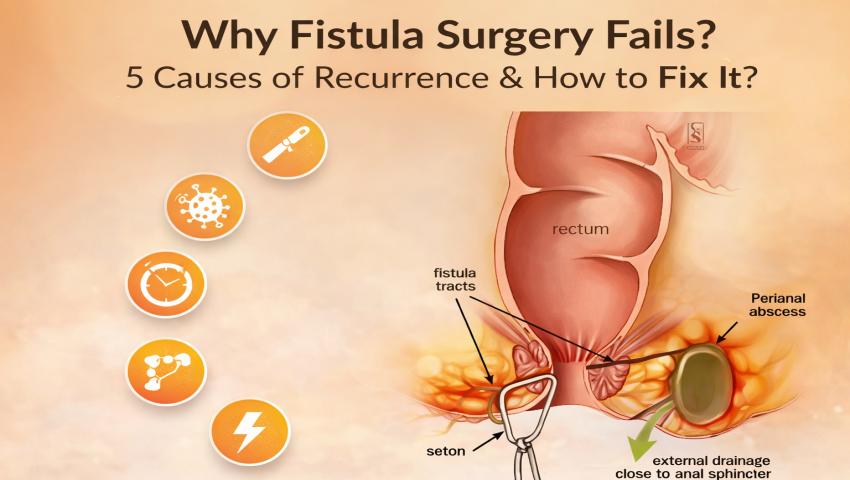
Why Fistula Surgery Fails? 5 Causes of Recurrence & How to Fix It?
Anal fistula is a painful and uncomfortable condition. Many patients undergo surgery expecting permanent relief. However, in some cases, the fistula returns. This is called recurrence. Recurrence can be physically painful and mentally stressful. Patients often feel disappointed and confused. The good news is that recurrent fistula can be treated successfully with proper evaluation and advanced techniques. According to Dr Samrat Jankar, recurrence usually happens due to incomplete treatment, complex fistula tracks, or underlying infection. This blog explains the 5 common reasons why fistula surgery fails and how it can be fixed.
5 Reasons: Why Fistula Recurrence Happens?
1. Incomplete Removal of Fistula Tract:
The most common reason for recurrence is incomplete removal of the fistula tract. If a small part of the infected tunnel remains inside, infection can restart. In complex fistulas, the tract may have multiple branches. If all branches are not identified during surgery, recurrence is possible.
How to Fix It?
Proper imaging like MRI pelvis before surgery helps in mapping the entire fistula tract. Advanced surgical planning ensures complete removal.
Dr Samrat Jankar carefully evaluates the fistula type before surgery to reduce recurrence risk.
2. Complex or High Fistula:
Some fistulas are simple. Others are complex. High fistulas involve deeper muscles of the anal sphincter. Treating them is challenging because aggressive surgery may affect bowel control.
In such cases, recurrence risk is slightly higher.
How to Fix It?
Modern techniques like laser fistula treatment or sphincter-saving procedures help treat complex fistulas safely. These methods reduce damage to muscles and lower recurrence rates. Early consultation with an experienced colorectal specialist is very important.
3. Undiagnosed Infection or Abscess:
If an active infection or abscess is present during surgery, healing may not occur properly. Infection can continue internally and cause recurrence.
How to Fix It?
Proper drainage of abscess before definitive surgery is essential. Antibiotics alone are not enough. Surgical drainage followed by planned fistula treatment gives better results. Dr Samrat Jankar ensures infection is fully controlled before proceeding with final surgery.
4. Poor Post-Operative Care:
Healing after fistula surgery requires proper wound care. Neglecting hygiene, missing follow-ups, or not following medical advice can increase recurrence risk.
Common mistakes include:
- Poor cleaning of surgical area
- Ignoring discharge
- Stopping medicines early
- Delaying follow-up visits
How to Fix It?
Patients should follow post-surgery instructions strictly. Regular sitz baths, proper hygiene, high-fibre diet, and timely follow-up are essential.
Clear communication between doctor and patient improves long-term results.
5. Underlying Conditions Like Crohn's Disease or Diabetes:
Certain medical conditions increase recurrence risk. Crohn’s disease, tuberculosis, and uncontrolled diabetes can delay healing.
If the underlying condition is not treated, fistula may return.
How to Fix It?
Detailed evaluation and blood tests are important. Managing diabetes and ruling out Crohn’s disease helps in reducing recurrence.
Proper medical treatment along with surgery gives better outcomes.
How Recurrent Fistula Is Treated?
Recurrent fistula requires careful reassessment. Repeat surgery without proper planning may fail again.
Step 1: Detailed Evaluation:
- MRI pelvis
- Clinical examination
- Blood tests
Step 2: Choosing the Right Procedure:
Depending on complexity, options include:
- Laser Fistula Surgery (FiLaC)
- VAAFT (Video-Assisted Anal Fistula Treatment)
- Seton placement
- LIFT procedure
- Advanced sphincter-saving techniques
At Kaizen Gastro care Dr Samrat Jankar focuses on minimally invasive, sphincter-preserving methods to reduce recurrence and protect bowel control.
Why Choosing the Right Specialist Matters?
Fistula surgery requires expertise and experience. Improper technique increases recurrence risk. Consulting an experienced colorectal surgeon like Dr. Samrat Jankar ensures:
- Accurate fistula mapping
- Proper surgical planning
- Advanced laser technology
- Lower recurrence rates
- Better healing
Patients from Pune and nearby areas prefer specialised colorectal care for complex fistula treatment
When Should You Consult Immediately?
Seek medical advice if you notice:
- Persistent discharge after surgery
- Recurrent swelling
- Fever
- Increasing pain
- New opening near anus
Watch to Know More...
Final Thoughts:
Failed fistula surgery can be discouraging. But recurrence does not mean the condition cannot be cured. With proper evaluation, advanced imaging, and modern surgical techniques, recurrent fistula can be treated successfully. If you are facing repeated fistula problems, Book an Appointment consult an experienced colorectal specialist like Dr Samrat Jankar for accurate diagnosis and advanced treatment options. Do not ignore symptoms. Early expert care leads to long-term relief and better quality of life.