
- 18/02/2026
- Dr. Samrat Jankar
- 0 Comments
- Fistula Treatment
When Is Surgery Necessary for an Anal Fistula?
Dealing with an anal fistula is often a distressing experience. Many patients feel hesitant to discuss it openly. You might be hoping that a few days of rest or some over-the-counter creams will make it vanish. However, medical reality is quite different.
Unlike a common cold or a minor skin rash, an anal fistula is a structural issue. It is a physical “tunnel” that has formed where it should not be. Because of this, it rarely heals on its own. Most patients go through a cycle of using antibiotics, feeling better for a week, and then seeing the symptoms return.
If you are stuck in this loop, it is time to seek a Fistula Specialist in Pune. Understanding when to move from home remedies to professional Fistula Treatment in Pune is the key to a pain-free life. In this detailed guide, Dr. Samrat Jankar, a leading expert at Kaizen Gastro Care, explains why surgery is often the only permanent solution.
What Exactly is an Anal Fistula?
To understand the treatment, you must first understand the condition. An anal fistula is a small, abnormal tunnel that connects the inside of the anal canal to the skin near the anus.
The Primary Cause:
In about 50% of cases, a fistula starts with a perianal abscess. An abscess is a collection of pus caused by an infection in the small glands inside the anus. Even after abscess drainage, a small channel may remain. This channel links the gland to the skin surface. This is what we call a fistula. It leads to a chronic infection that the body cannot fight off because the “tunnel” keeps getting contaminated by bowel movements.
Why Medications Alone Cannot Cure a Fistula?
A common dilemma for patients is the fear of surgery. Many people try non-surgical fistula management for months. They use warm sitz baths, antibiotic ointments, and painkillers.
Why Antibiotics Fail?
Antibiotics are excellent for killing bacteria and reducing swelling. However, they cannot “close” a physical pipe or tunnel. Once you stop the medicine, the bacteria from the colon re-enter the track. The infection returns.
The Risk of Delay:
If you wait too long, a simple fistula can turn into a complex fistula. This means the tunnel starts branching out like the roots of a tree. It may involve the sphincter muscles, which are responsible for bowel control. Treating a complex fistula is much harder than treating a simple one. This is why seeking early Fistula Treatment in Pune is highly recommended by specialists like Dr. Samrat Jankar.
Key Indicators: When Is Surgery Necessary?
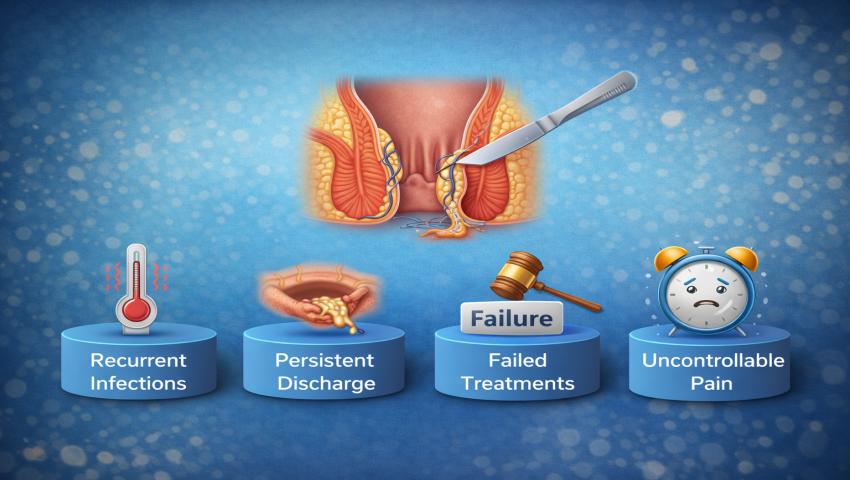
How do you know that “enough is enough”? Here are the clinical red flags that indicate surgery is no longer optional but necessary:
- Persistent Drainage: If you constantly notice pus, blood, or foul-smelling fluid on your undergarments, the fistula is active. This constant drainage causes skin irritation and ruins personal hygiene.
- Recurrent Abscesses: Do you frequently get a painful, red lump near the anus that bursts and then reforms after a few weeks? These recurrent infections mean the fistula track is acting as a reservoir for bacteria.
- Severe Pain and Discomfort: When the tunnel gets blocked, pressure builds up. This causes throbbing pain that makes it difficult to sit, walk, or pass stools. If your daily quality of life is affected, it is time for fistula surgery in Pune.
- Systemic Symptoms: If your fistula is accompanied by high fever, chills, or extreme tiredness, the infection may be spreading. This can lead to a serious condition called sepsis if not treated by a specialist immediately.
- Complex Tracks on MRI: Sometimes, a physical exam isn’t enough. At Kaizen Gastro Care, we often use MRI imaging to map the fistula. If the scan shows multiple openings or tracks crossing the muscle, surgery is the only way to prevent permanent damage.
Modern Surgical Options in Pune: Fear-Free Treatment
The word “surgery” often scares people. However, Fistula surgery in Pune has evolved significantly. At Kaizen Gastro Care, Dr. Samrat Jankar uses advanced, minimally invasive techniques. These methods focus on quick recovery and minimal pain.
- Laser Fistula Treatment (FiLaC): This is a state-of-the-art procedure. A thin laser fiber is inserted into the fistula track. The laser energy seals the tunnel from the inside. There are no large cuts, no daily dressings, and patients can often go home the same day.
- Fistulotomy: For simple, superficial fistulas, this remains the gold standard. The surgeon opens the track so it can heal as a flat scar. It has a very high success rate.
- LIFT Procedure (Ligation of Intersphincteric Fistula Tract): For complex cases, the LIFT procedure is excellent. It allows the surgeon to close the fistula without cutting the anal sphincter muscles. This ensures that your bowel control remains 100% intact.
Choosing the Right Specialist: Why Experience Matters?
The success of a fistula operation depends heavily on the skill of the surgeon. If the track is not cleaned properly, the fistula will return. If the muscles are handled roughly, it could lead to incontinence.
Choosing a Fistula Specialist in Pune like Dr. Samrat Jankar ensures you are in safe hands. As a highly qualified gastroenterologist and surgeon, Dr. Samrat Jankar understands the delicate balance of the anal anatomy. At Kaizen Gastro Care, we don’t just treat the symptoms; we ensure the source of the infection is permanently removed.
Conclusion: Taking the First Step to Recovery
An anal fistula is a persistent condition, but it is completely treatable. Surgery is often the only path to a permanent cure. With modern laser technology and expert care at Kaizen Gastro Care, you don’t have to live in pain or embarrassment.
Don’t let a treatable condition affect your work and happiness. Listen to your body and choose the right medical path early. Book Appointment Now