
- 24/03/2026
- Dr. Samrat Jankar
- 0 Comments
- Fistula Treatment
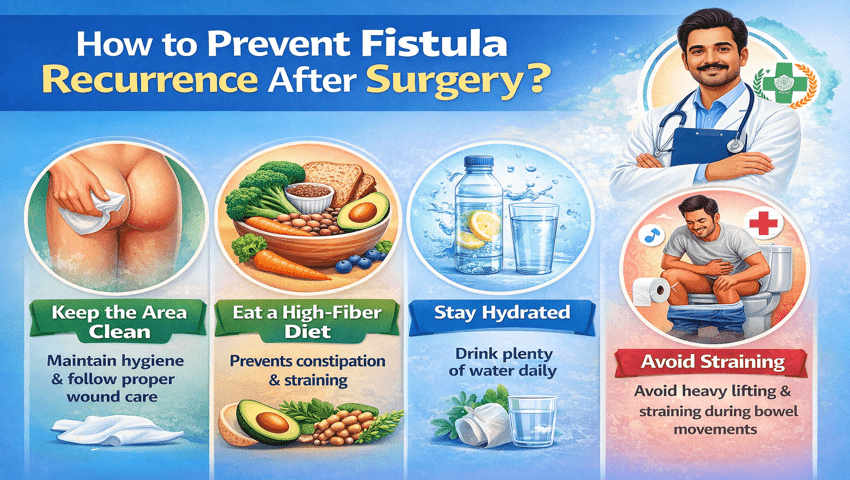
How to Prevent Fistula Recurrence After Surgery?
Dealing with a fistula is physically exhausting and emotionally draining. The biggest fear for any patient isn’t just the surgery itself, but the question: “Will it come back?” Dr. Samrat Jankar, a renowned Surgical Gastroenterologist in Pune, notes that while many patients opt for quick fixes, preventing recurrence requires a blend of surgical precision and disciplined recovery. As the Director & Head of the Department of Surgical Gastroenterology at Kaizen Gastro Care Clinic, PCMC, Pune, Dr. Jankar brings over 15 years of experience and a track record of 5,000+ successful anal fistula surgeries.
In this guide, we dive deep into why fistulas recur and how you can ensure a permanent cure.
Understanding Fistula: What Exactly Happens in the Body?
To define a fistula (specifically bhagandar disease), imagine an abnormal tunnel-like track that connects the inside of the anal canal to the skin near the anus.
It often starts as a fistulated abscess—an infection in the small anal glands. When this abscess doesn’t heal correctly or bursts, it creates a permanent track. This fistula formation leads to persistent bhagandar symptoms like pain, anal swelling, and discharge of pus or blood.
Why Fistula Recurrence Happens After Surgery?
Many patients ask why fistula happens again even after a primary procedure. Fistula recurrence after fistulotomy or laser treatment usually occurs due to:
- Incomplete Removal of the Infection: If the internal opening of the track is missed, the source remains active.
- Choosing the Wrong Type of Surgery: Not every fistula is suitable for laser; some complex tracks need traditional methods.
- Lack of Proper Pre-Surgery Diagnosis: Operating without knowing the exact path of the tunnel is like driving without a map.
- Presence of Underlying Diseases: Conditions like Crohn’s Disease or Tuberculosis can prevent healing.
- Secondary Tracts: If the fistula has branches (side-tracks) that aren’t cleaned, a new perianal fistula can form.
10 Important Ways to Prevent Fistula Recurrence:
Preventing bhagandar disease from coming back is not just about the surgery; it’s about the strategy used before, during, and after the procedure. Dr. Samrat Jankar, the Best Gastroenterologist in Pune, emphasizes that a fistula is a “biological tunnel” that requires a master plan to shut down permanently.
Below is a deep explanation of the 10 vital steps to ensure your perianal fistula surgery results in a permanent healed fistulotomy scar.
1. Choose a Qualified Fistula Specialist Surgeon
A fistula is a tricky disease because it involves the anal sphincter muscles. If a surgeon is too aggressive, you might lose bowel control (incontinence); if they are too cautious, the fistula formation remains.
- The Expertise Factor: You need a Fistula Specialist in Pune like Dr. Samrat Jankar, who has performed 5,000+ surgeries. A qualified MBBS, MS surgeon or a Colorectal Specialist understands the cryptoglandular hypothesis—the idea that the infection starts in a specific gland that must be removed to prevent recurrence.
2. Mandatory MRI Fistulogram Before Surgery
Operating on a fistula without an MRI is like driving in a new city without a map.
- The Map of the Track: An MRI Fistulogram (ideally 1.5 to 3 Tesla) identifies if the track is simple or complex, if it crosses the sphincter muscles, or if there are horseshoe extensions.
- Why it Matters: Many recurrences happen because a secondary track was hidden in the tissue. The MRI shows the surgeon exactly where to cut, ensuring no hidden pockets of infection are left behind.
3. Select the Right Surgical Technique (Gold Standard vs. Fancy)
There are many fancy names today, but Dr. Samrat Jankar notes that the Gold Standard remains Fistulotomy or Fistulectomy.
- Fistulotomy: Opening the track so it heals from the inside out. This has the lowest recurrence rate (nearly 95% success) for simple fistulas.
- Sphincter Preserving: For complex cases, techniques like LIFT (Ligation of Intersphincteric Fistula Tract) are used to save the muscle. Choosing the wrong technique for a complex track is the #1 reason why fistula happens again.
4. Do Not Rely Solely on Laser Surgery
Laser is a high-tech tool, but it is not a “magic wand.”
- The Marketing Myth: Many clinics promote Laser Fistula Treatment in Pune as a 100% cure. However, Dr. Samrat Jankar warns that if laser is used by an inexperienced hand (the”monkey with a tool analogy), it can fail.
- The Reality: Laser works by burning the track shut, but if the internal opening isn’t closed perfectly, the pressure from the rectum will push it open again. Precision of the surgeon matters more than the laser beam.
5. Deep Cleaning and Proper Wound Dressing
The surgical area is naturally dirty because of its proximity to the anal canal.
- Preventing Bridging: If the skin heals faster than the internal tissue, it creates a bridge, trapping bacteria underneath. This leads to a new fistulated abscess.
- Professional Care: For the first 2–3 weeks, deep cleaning and specialized dressing are required to ensure the wound heals bottom-up.
6. Strict Adherence to Post-Surgery Instructions
Healing a perianal fistula is a marathon, not a sprint.
- Sitz Baths: Sitting in warm water with betadine multiple times a day helps blood circulation and flushes out debris.
- Medication: Taking the full course of antibiotics and stool softeners is non-negotiable. If you get constipated and strain, you can tear the delicate fistulous opening that is trying to heal.
7. Management of Underlying Systemic Diseases
Sometimes the causes fistula in ano aren’t local—they are systemic.
- Crohn’s & TB: If a patient has intestinal Tuberculosis or Crohn’s Disease (Inflammatory Bowel Disease), the body’s healing mechanism is broken.
- The Solution: In such cases, Dr. Samrat Jankar recommends a Colonoscopy to check the health of the intestines. You must treat the TB or Crohn’s simultaneously, or the fistula will keep returning.
8. Maintaining Rigid Anal Hygiene
Bacteria thrive in moisture and fecal residue.
- How to prevent perianal abscess from returning: Use soft wipes or a bidet rather than harsh paper. Keep the area dry using medicated powders if suggested by your doctor. This prevents the infection of the 8–12 anal glands that trigger fistula how to cure challenges.
9. Regular Follow-Ups for Three Months
Dr. Jankar often says that once you have surgery, you are “married” to the clinic for three months.
- The Critical Window: Most recurrences are detected in the first 90 days. Regular check-ups allow the surgeon to debride (clean) any unhealthy granulation tissue that might be forming a new track.
10. Vigilance Against Early Warning Signs
Don’t wait for a full-blown Bhagandar. If you feel:
- Anal swelling or a hard lump.
- Persistent itching or wetness in the undergarments.
- Mild bhagandar symptoms like a prickling pain. Consult your specialist immediately. Catching a recurrence at the “abscess stage” is much easier than treating a fully formed secondary fistula.
When to Consult a Fistula Specialist Immediately?
If you are searching for a fistula clinic near you because your previous surgery failed, remember that fistula recurrence after fistulotomy is common if the initial approach was not comprehensive. As the Best Colorectal Surgeon in Pune, Dr. Jankar specializes in “redo” surgeries for complex and recurrent cases.
Conclusion:
A fistula is a difficult disease in a difficult place, but it is entirely curable with the right approach. Success depends on a precise MRI fistulogram, a qualified surgeon like Dr. Samrat Jankar, and your commitment to post-operative care. Don’t be swayed by quick-fix promises; choose experience and evidence-based treatment to leave bhagandar in the past for good.
Stop living with the discomfort and fear of recurrence. Consult Dr. Samrat Jankar, the leading Fistula Specialist in Pune, for a comprehensive diagnosis and advanced Fistula Treatment in Pune.